AdWords Management San Francisco
Google’s push toward automation and broader targeting has driven up costs for San Francisco businesses, with ads showing for low-intent searches and little visibility into where your budget goes.
My San Francisco AdWords management services put control and transparency back in your hands: cutting wasted spend, filtering out bad traffic, and bringing in higher-quality leads.
The goal is simple: get Google Ads working for your business again.

What my clients are saying
Important Info for New Clients
Most of my clients are in lead generation primarily in competitive markets, meaning every dollar has to be tracked and measured. Not everyone fits my strategy, and that’s by design.
When looking for an AdWords agency in San Francisco, be aware that I operate independently, and not under a large agency. This means you get to work directly with the person running your campaign at all times, as opposed to working with account managers and juniors.
For me to help you bring in results with your paid ads, I only take on a limited number of clients. If paid ads are not going to work for your business, or you have unclear expectations/goals, I will turn down your project.
Before starting on any new project, we always do a free zoom call, to make sure we are in alignment with regards to strategies, budgets and expected goals/results.
San Francisco AdWords Management Services: Rebuilding Google Ads for Real Results
More leads or sales for the price you’re already paying
I get better performance out of the Google Ads budget you already spend by reorganizing your account. This often leads to an increase in leads or sales. The structure of this process and approach is data-driven and focused on eliminating waste.
Why Google Ads Performance Dropped for So Many San Francisco Businesses
More automation, broader targeting, and less control
Many businesses have experienced a decline in Google Ads performance in the last few years due to more automation and looser match types and broader targeting. This can work for large advertisers because they have the budget for it, but for smaller and mid-sized businesses it means higher costs and less relevant traffic.
I’ve spent a lot of time figuring out what still works and fixing what doesn’t and making improvements to perform better in this new environment. The focus is on eliminating waste and increasing intent. My goal is to gain back some control, even with a more automated Google Ads account setup.
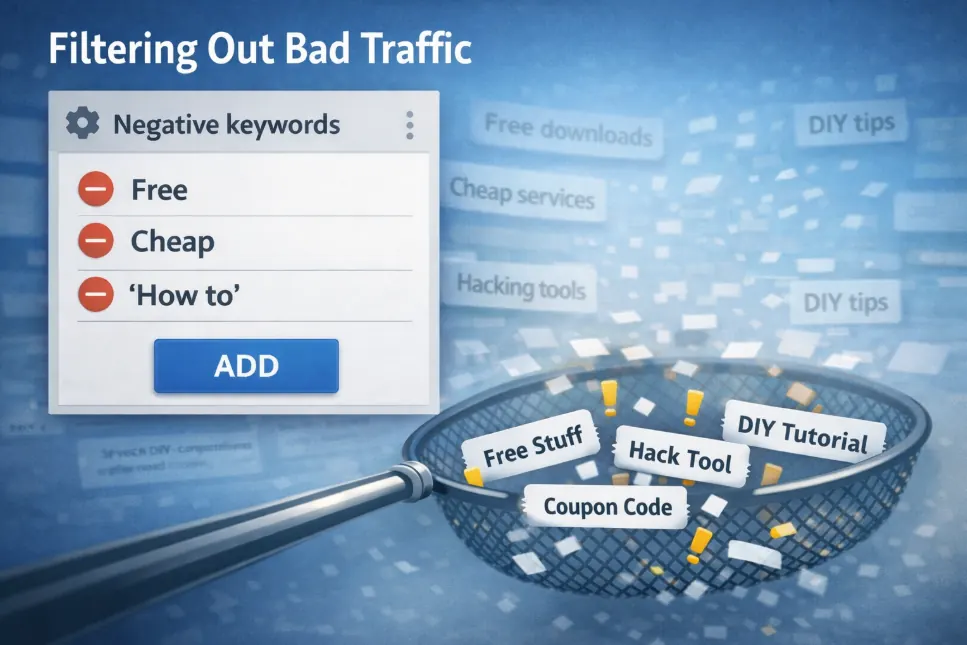
Filtering Out Bad Traffic With More Effective Keyword Control
Eliminating waste while preserving volume
After Google relaxed its control over search terms, irrelevant or low-intent searches started displaying ads. A negative keyword structure is proven to solve this issue and block waste while preserving scale.
Advanced Monitoring & Ongoing Optimization
What Google Ads won’t show you
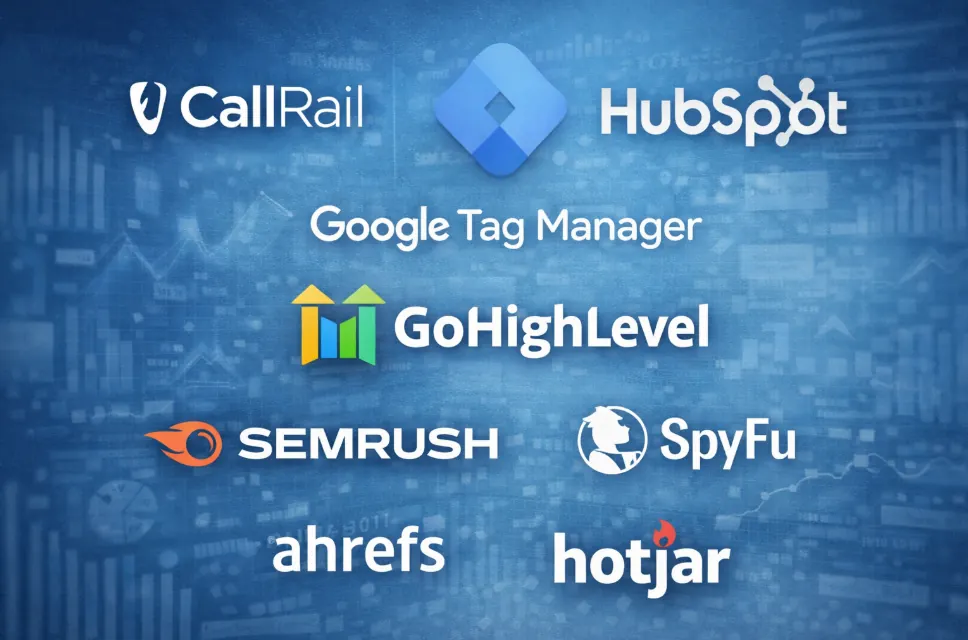
Google Ads is limited on its own. I use other tools to integrate with your account to gain more data and make improvements.
CallRail helps me see where leads come from, listen to call recordings, and tag which leads are qualified. This leads to a significant decrease in junk and spam leads, which in turn saves time and budget.
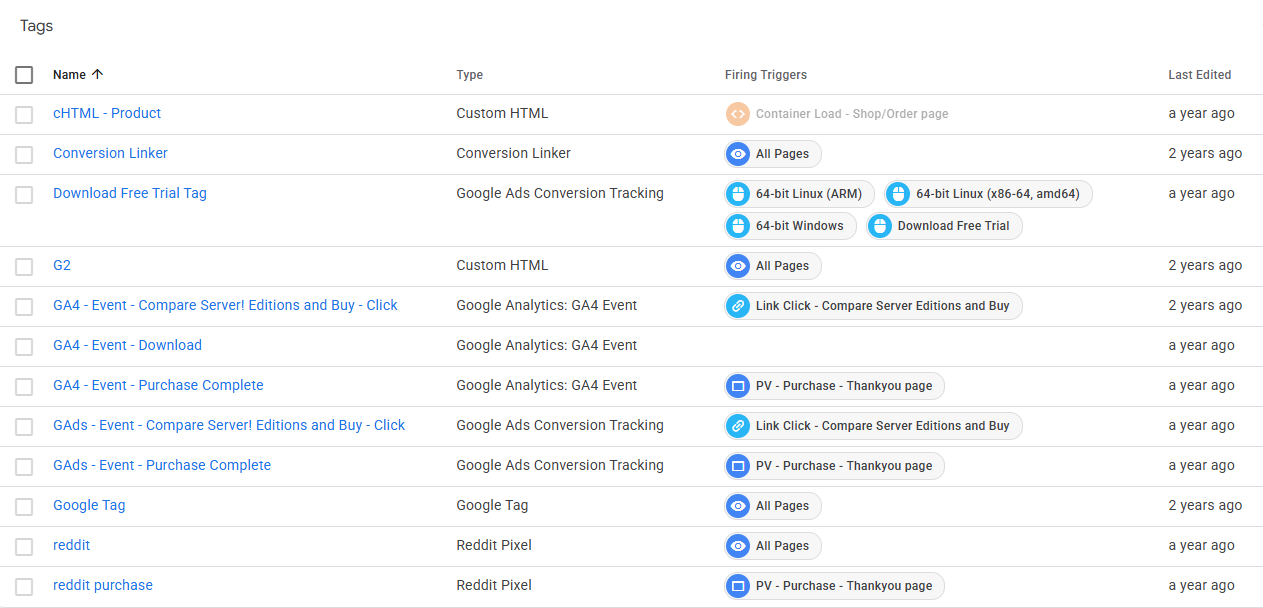
Google Tag Manager helps with conversion tracking and is added to your website to let Google learn from useful signals instead of bad signals.
I use GoHighLevel and HubSpot integrations to see the lead conversion journey.
I use SEMRush, Ahrefs and SpyFu to see what your competitors are doing behind the scenes, including bids, ads, and what keywords they are targeting.
I use Hotjar and similar tools to view website visitor session recordings and heatmaps to view the actual website visitor journey and learn why forms are not being filled out, to increase conversion rate and improve leads without increased ad spend.
The tools above help us look at which leads are turning into customers and spending time analyzing quality leads, rather than quantity leads. Google Ads shows only some data. But when using these tools in conjunction with Google Ads, we are able to identify wasted spend, lost opportunities, and performance constraints.
Structured Campaign Builds Across All Formats
Search, Performance Max, Display, YouTube, and Shopping
There is a structured process for each campaign type. Ads and creatives are built for performance with conversions in mind, not built with templates that look good but don’t lead to any measurable result.
Accuracy Is Key
Automation is only as good as the data.
Prior to the launch or scale of any effort, I check your tracking setup for accuracy. This includes Google Ads, GA4, Google Tag Manager, call tracking and reporting dashboards. With bad conversion data, automated bidding is useless.
Reporting That Aligns With Business Objectives
Without accurate tracking, reporting gets very expensive.
Reporting will focus on what matters. You will get reporting on cost per lead and return on advertising spend to show profitability. You will always know where your advertising dollars are going.
When Google Ads Is Not Working
There are multiple solutions
Your Google Ads account should generate business, not just clicks. The reason the account is generating clicks but no business is because the account needs to take a different approach.
Innovating to Adapt to Google Ads
Rebalancing focus on what matters in paid search
I have adapted with the changes Google has made to their platform. I’ve changed how we work with the Google changes to regain control back to you. Let’s see if paid search can regain its value for your business.
Common Questions About AdWords Management in San Francisco
What kinds of Google Ads campaigns do you generally run?
I typically start with Search campaigns. That’s where most of the low-funnel intent is. These are people that are actively searching for your service, not people that are just casually scrolling. Once we have a good amount of conversions and data, then I’m open to adding other campaigns, including the Performance Max, if there’s a good opportunity there for the business.
Do you manage the Google Ads account yourself?
Yes, I manage everything. I am very hands-on with each account, and that’s something I take a lot of pride in. There is a lot of transparency with each client about the work that is being done.
What do you consider a “conversion”?
Conversions are leads that ultimately turn into a booking, appointment, sale, contact, or inquiry. Clicks do not equal conversions.
How do you accurately track phone calls and leads?
For businesses that rely heavily on phone calls, I use CallRail to better understand lead source, duration of call, quality of lead, and if there was meaningful conversation, or if it was a waste of Ad spend. I use Google Tag Manager to set up event tracking for meaningful actions, like a purchase or lead, instead of blind tracking so that Google Ads knows what to optimize for.
Are you able to track what happens to a lead after it’s created?
We definitely track that. With Google Ads and a system like HubSpot or GoHighLevel connected, we can see which leads convert to customers or sales. That is extremely valuable, because most campaigns are optimized only for the lead generation.
How long do I need to wait to see results?
There are many things that rely on time with Google Ads. You have to be patient. Sometimes you’ll see daily fluctuations and be tempted to make changes. Don’t do that. Take a step back, formulate a plan to achieve your end goals, and act only when the time is right.
How much should I spend in a cutthroat market like San Francisco?
Budgets truly depend on the level of competition, and in a market like San Francisco, small budgets usually don’t produce any results. I am straight forward about that. If your budget isn’t realistic for the Bay Area, I’ll tell you.
Do you work with a wide range of businesses?
Not really. I work best with a select few. Taking on too many clients makes it hard to help the ones I have. Expectations and paid advertising need to be aligned for it to work, and if they’re not, I will be upfront about it and not try to trick you into thinking they are.
How do you communicate results with your clients?
Cost per lead, return on ad spend and other results are communicated clearly. You will be shown what is working, what isn’t, why and how things are changed, and more.
What is the process for getting started?
We schedule a 15 to 30 minute free Zoom call where we will see if working with us strategically makes sense, if your expectations are reasonable, and if it is financially prudent for you to use our services. There is absolutely no sales pressure.